For a watch repair shop, changing a strap may be a routine job. For a distributor or repair-tool buyer, however, choosing the right watch spring bar tool is less straightforward than it first appears. Many models look almost identical in a catalog: a metal handle, a fork at one end and a pin at the other. In actual use, small differences in fork geometry, tip thickness, working clearance and material hardness can make one tool easy to control and another frustrating to use.
This becomes especially important when the same product range must serve different customers. A tool that works comfortably with an open leather strap installation may not provide enough access around a tightly fitted metal bracelet. A very fine fork may reach a narrow spring bar shoulder, but if its geometry or hardness is poorly controlled, it can bend or wear quickly. A replaceable-tip design may be attractive for professional users, but only if replacement tips remain consistent from one production batch to the next.
For distributors, watch strap brands and professional repair-supply companies, the objective is therefore not to stock as many spring bar tools as possible. It is to understand which tool configurations cover the applications your customers actually encounter.
This article explains the main types of spring bar tools, how fork sizes and tip designs differ, and which configurations are better suited to leather straps, metal bracelets, and professional repair work, helping buyers build a practical product range instead of sourcing tools by appearance alone.
What Is a Spring Bar Tool?
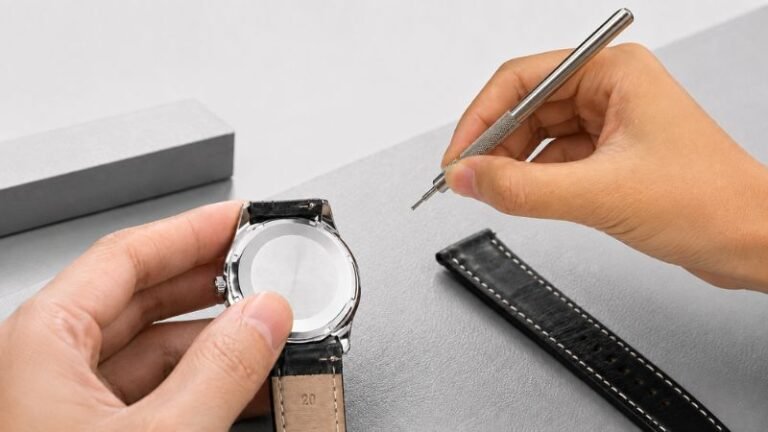
A spring bar is the small spring-loaded component commonly used to connect a watch strap or bracelet to the watch case. Compressing one or both ends allows the strap to be removed from the lugs or installed again.
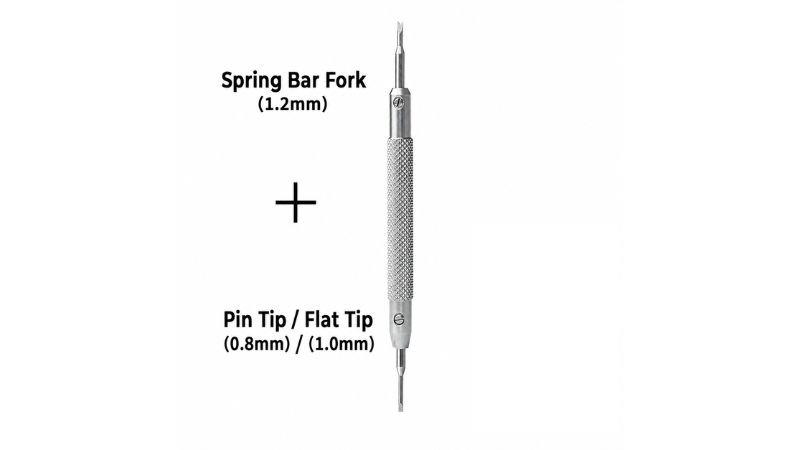
A standard spring bar removal tool normally has a narrow handle with one or two working ends. The most common configuration combines a fork tip at one end with a pointed pin tip at the other.
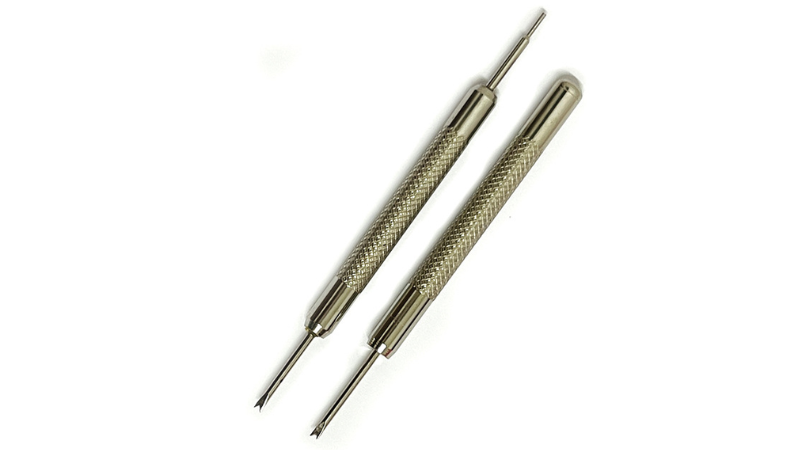
The fork end is designed to reach the shoulder or flange of the spring bar and compress it away from the watch lug. It is the side most often used for removing leather straps, rubber straps and many conventional bracelets.
The pointed end serves a different purpose. It can be used with drilled lugs, where the spring bar can be accessed through a hole on the outside of the watch lug, and it is also useful for certain adjustment or positioning operations.
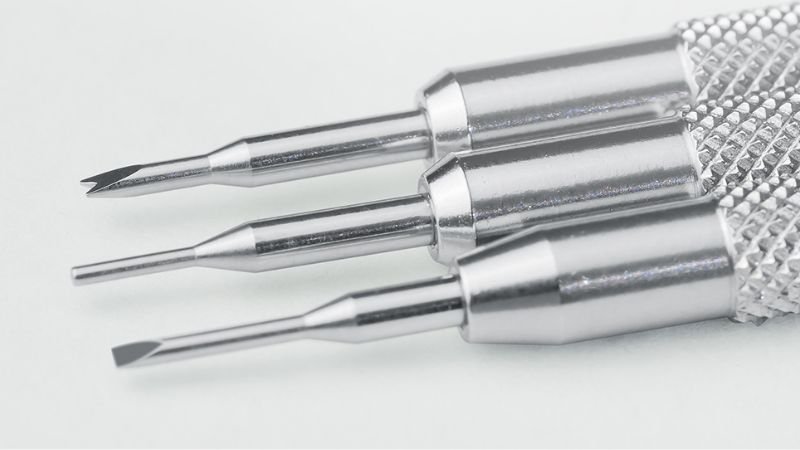
This basic construction is simple, which is one reason spring bar tools are available at almost every price level. But the simplicity of the handle can be misleading. Most of the performance difference is concentrated at the working tip. A fractionally different fork profile, poorly finished edge or loose tip connection can change how the tool behaves around a watch case.
For professional buyers, the handle is therefore only part of the product. The fork, pin and the connection between the tip and the handle deserve just as much attention.
Why Spring Bar Tool Selection Is More Complicated Than It Looks
When buyers compare spring bar tools only from photographs, the products often seem interchangeable. In production and actual repair work, they are not.
The first limitation is working space. A leather strap normally leaves relatively open access between the strap and the watch lug. A fitted metal end link may leave only a narrow area where the fork can reach the spring bar shoulder. A fork that performs perfectly well on the first watch may simply be too wide or too thick for the second.
The second issue is control. When a fork engages the spring bar, the user needs enough contact to compress the bar without slipping. If the contact surface is too small or the fork profile does not properly engage the shoulder, the tool can slide away. On a finished watch case, this is more than an inconvenience; it increases the risk of scratching the lug or bracelet.
Material and finishing matter as well. The working end needs sufficient strength for repeated compression, but hardness alone does not make a good tool. A poorly finished hard tip can still damage a watch. Likewise, a very thin fork that provides excellent access but lacks sufficient strength may deform during regular workshop use.
These are the kinds of differences that are difficult to judge from an overall product image. For distributors comparing suppliers, it is worth looking beyond handle appearance and asking about tip geometry, finishing, material consistency and replacement-tip compatibility.
Spring Bar Tool Fork Sizes Explained
Fork size is one of the most important specifications in a spring bar tool, but it is also one of the easiest to oversimplify.
A smaller fork is not automatically a better fork. The correct width depends on how much access is available around the spring bar and how securely the fork needs to engage the shoulder.
A useful way for buyers to understand the range is to divide fork tips into three general application groups.
| Fork Type | Typical Application | Main Buying Consideration |
|---|---|---|
| Fine fork | Tight lug spaces and fitted bracelets | Access and precision |
| Standard fork | General strap replacement | Versatility |
| Wider fork | Larger spring bar shoulders or open access | Stable engagement |
These are application categories rather than universal industry sizes. Different manufacturers may offer several dimensions within each group, which is why the actual fork specification should always be checked when building a product assortment.
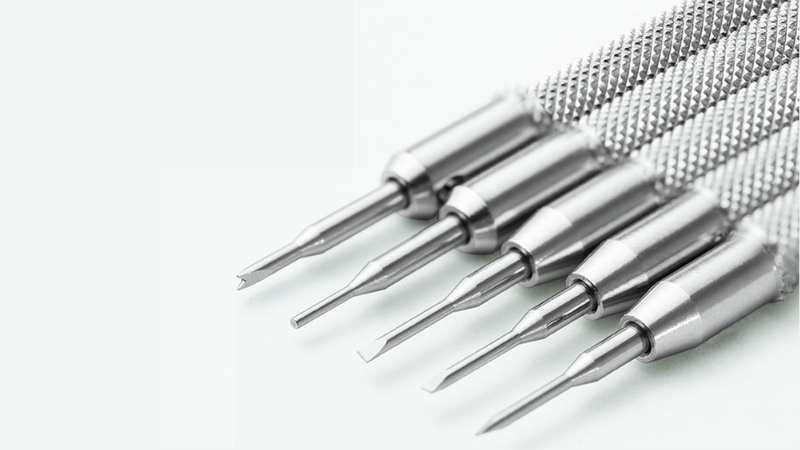
Fine Fork Tips
Fine forks are primarily about access.
They are useful where the working space between a strap, bracelet end link and lug is limited. This often makes them more suitable for certain metal bracelets and watches where a normal fork cannot comfortably reach the spring bar shoulder.
The important point for a buyer is that a fine fork must still be mechanically reliable. Simply making the working end thinner does not guarantee a professional tool. The shape of the opening, material selection, heat treatment and edge finishing all affect durability.
For a repair-tool distributor, a fine-fork model makes sense as a separate professional option rather than as a replacement for every general-purpose spring bar tool.
Standard Fork Tips
A standard fork covers the broadest range of everyday work and should normally form the core of a spring bar tool assortment.
It is suitable for many leather, fabric, silicone and rubber straps and for watches where the spring bar shoulder is reasonably accessible. Because it provides more contact than a very narrow fork while still fitting ordinary lug spaces, it offers a useful balance between access and stability.
For a retailer selling a basic watch strap replacement kit, this is often the logical configuration. For professional repair shops, it remains useful even when fine-fork models are also available.
From a purchasing standpoint, this is usually the specification where consistency matters more than novelty. If customers repeatedly reorder the same tool, they expect the fork profile and working feel to remain the same.
Wider Fork Tips
A wider fork can provide more stable contact on larger spring bar shoulders and applications where access is not restricted. Because it covers a larger contact area, it may feel easier to control in the right application.
The limitation is obvious: it needs more space.
This is why a wider fork should not be marketed simply as a stronger or better spring bar tool. Its usefulness depends on the watch and strap construction. For distributors, it is better positioned as an application-specific option rather than the default tool for every customer.
Fork Shape Matters as Much as Fork Width
Width is easy to put into a specification sheet. Geometry is harder to describe, but often just as important.
The opening of the fork determines how the tool contacts the spring bar shoulder. Some designs use a sharper V-shaped opening that helps the user locate the working point. Others use a broader or more parallel profile that provides a different contact area.
Neither geometry is universally superior. What matters is whether the tool can enter the available space, engage the spring bar reliably and release it without excessive slipping.
Thickness also needs to be considered together with width. A narrow fork with a thick body may still struggle to access a tightly fitted bracelet. Conversely, an extremely thin fork may enter easily but require better material control to maintain strength.
This is where manufacturing consistency begins to matter to distributors. Two products may both be described as having a fine fork, yet the actual working experience can differ because of the profile, thickness, edge finishing or transition between the tip and the shaft.
For procurement, fork size should therefore be treated as one specification within a complete tip geometry, not as the only specification that determines performance.
Pin Tips: When Do You Need Them?
The pointed end of a spring bar tool is sometimes overlooked because the fork handles most conventional strap changes. It becomes important when working with watches that provide external access to the spring bar.
Watches with Drilled Lugs
On a watch with drilled lugs, a small hole allows the user to reach the end of the spring bar from outside the case. Instead of inserting a fork between the strap and lug, the user can press the spring bar inward through the hole.
A pointed pin tip is the appropriate tool for this operation.
For buyers, the relevant specification is not simply whether a pin exists, but whether its diameter, length and strength suit the intended application. A pin that is too large may not enter the access hole. A very fine pin may offer better access but also requires sufficient mechanical strength for repeated use.
Other Adjustment Applications
Pin tips may also assist with positioning or certain bracelet-related jobs depending on the watch construction. However, buyers should avoid marketing the pointed end as a universal bracelet-link removal tool.
Spring bars, bracelet pins and screw links are different fastening systems. Professional tool ranges should make that distinction clear so end users select the correct tool rather than forcing one tool into an unsuitable application.
Spring Bar Tools for Leather Straps vs Metal Bracelets
One of the most practical ways to select a spring bar removal tool is to start with the type of product the customer’s workshop or retail business handles.
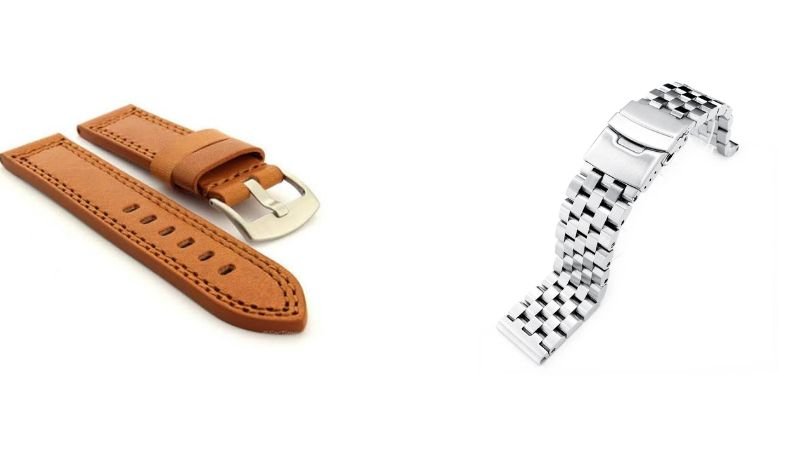
Leather, Rubber and Fabric Straps
With most conventional straps, the working area around the lug is relatively accessible. This makes a standard fork suitable for a large percentage of strap changes.
Here, ease of control becomes particularly important. A comfortable handle, properly finished fork and predictable engagement with the spring bar often matter more than having the smallest possible working tip.
For watch strap brands that include a tool with replacement straps, simplicity is valuable. The customer should be able to understand the tool quickly and use it without needing several interchangeable components. A general-purpose fork-and-pin spring bar tool is therefore often more suitable for this channel than an overly specialized professional configuration.
Metal Bracelets
Metal bracelets create a different set of problems. Solid or fitted end links can limit access around the spring bar, and the surrounding metal surfaces increase the consequences of a slipping tool.
For this application, a fine fork may give better access. Professional workshops may also prefer tools that compress both sides of the spring bar at the same time.
This is why a distributor serving both strap retailers and professional repair shops should not assume that one pen-style tool can cover the entire market.
The better strategy is to offer a general-purpose model for regular strap replacement and a second precision option for more restricted bracelet applications.
Spring Bar Tool vs Spring Bar Pliers
A standard pen-style spring bar tool normally compresses one end of a spring bar at a time. This is simple, economical and sufficient for a wide range of everyday strap work.
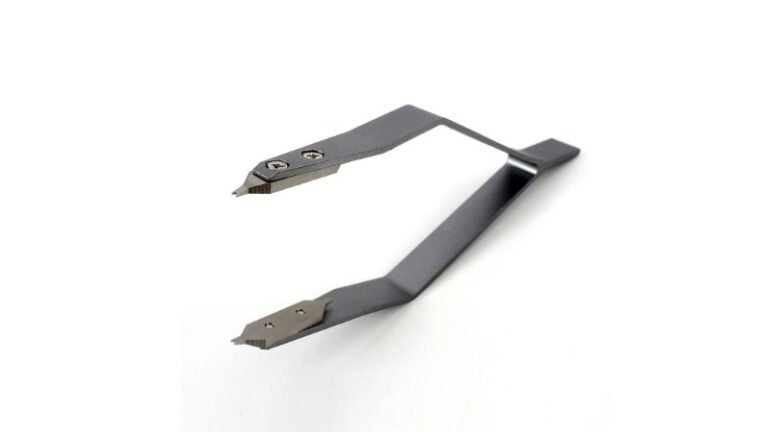
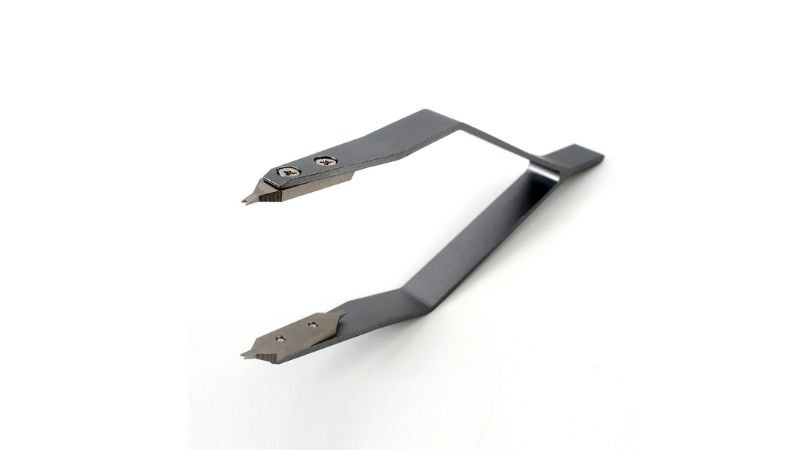
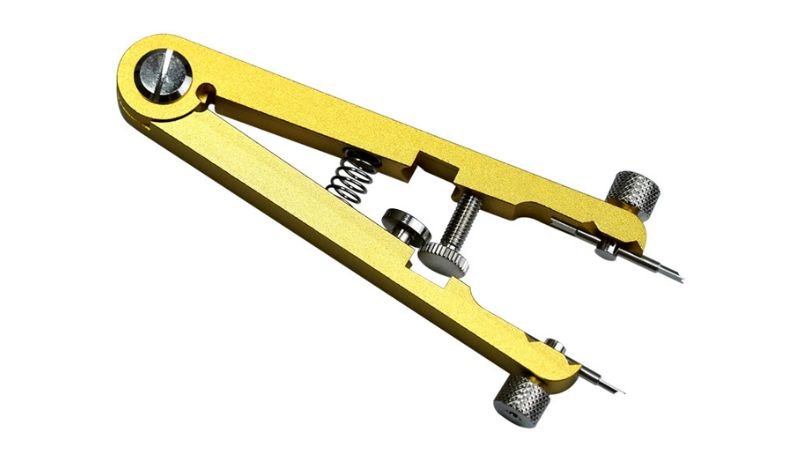
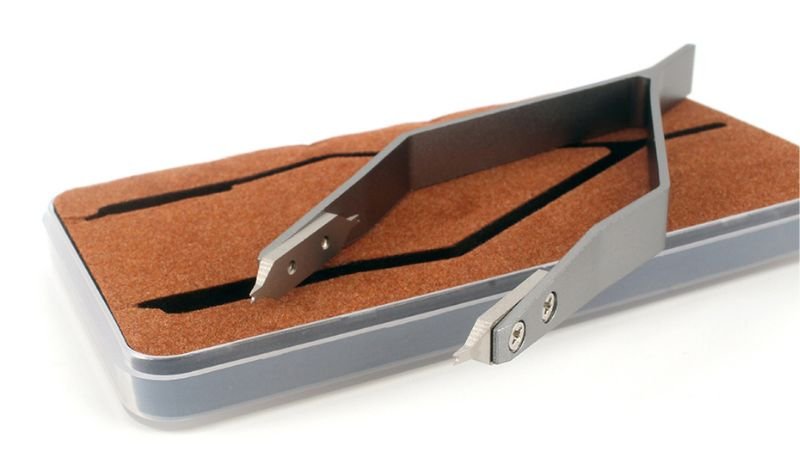
Spring bar pliers or tweezers are designed differently. Their two working tips can engage both sides of the spring bar, allowing both ends to be compressed together. This can make removal easier where a fitted metal bracelet leaves little freedom to work one side at a time.
For buyers, these should be viewed as complementary products rather than competing versions of the same tool.
A basic retail assortment may only need the pen-style tool. A distributor supplying professional repair shops can justify both.
The distinction is particularly useful when building a product range because it gives each tool a clear role:
Pen-style spring bar tool: general strap replacement and everyday repair.
Fine-fork spring bar tool: tighter access and precision applications.
Spring bar pliers: professional bracelet removal where simultaneous compression is useful.
This is a more understandable assortment for customers than carrying multiple similar-looking tools with no clear explanation of why each one exists.
Fixed Tips vs Replaceable Tips
Whether the working tips should be fixed or replaceable depends largely on the target customer.
A fixed-tip spring bar tool has a simple structure. It requires fewer components, keeps the retail price accessible and is easy to include in entry-level watch repair kits or watch strap packages. For occasional use, this construction can be entirely appropriate.
Replaceable-tip tools are better suited to users who expect longer service life or need different working configurations. If a fork becomes worn or damaged, the entire handle does not need to be discarded. Different fork or pin specifications may also be offered for the same basic tool body.
From a distributor’s perspective, however, replaceability creates an additional supply responsibility.
Replacement tips need to remain compatible.
A tool sold this year should ideally accept the replacement component supplied later. Thread dimensions, insertion depth, tip geometry and manufacturing tolerance all need to remain controlled. If a supplier changes the fit between batches, the supposed advantage of a replaceable system quickly disappears.
This is an important B2B distinction. A consumer may evaluate the tool from the first package they receive. A distributor has to think about the second and third replenishment orders as well.
What Makes a Good Professional Spring Bar Tool?
Professional quality is not determined by a polished handle alone. Several small manufacturing details work together to determine whether a spring bar tool remains reliable in repeated use.
Accurate fork geometry is the first requirement. The fork needs enough clearance to reach the spring bar while maintaining sufficient contact for controlled compression.
Suitable tip hardness is equally important. A tip that is too soft can deform; one that is improperly processed may become brittle. The objective is consistent strength for the intended geometry.
Smooth working edges help reduce accidental marking of finished watch components. A sharp manufacturing burr at the tip can undermine the benefit of an otherwise accurate tool.
For replaceable models, the connection between the tip and handle must remain stable. A tip that loosens during use reduces precision and creates frustration in a professional environment.
The handle itself also matters. Knurling or another controlled grip surface gives technicians better control, especially when working with small components. The objective is not decorative texture but practical handling.
Finally, distributors should look at batch-to-batch consistency. A good first sample is useful, but a professional supply program depends on later orders arriving with the same tip dimensions, fit and operating feel.
Common Problems Buyers Encounter with Low-Quality Spring Bar Tools
Many quality problems only become visible after a product has entered the market.
One common complaint is fork deformation after limited use. This may result from unsuitable material, an overly thin working section or inconsistent processing.
Another is variation between production batches. A distributor may approve one fork profile during sampling only to receive a later batch with noticeably different tip width or edge geometry. For a professional tool, even small changes can affect accessibility and handling.
Rough finishing is another frequent issue. Spring bar tools work close to polished or coated watch surfaces, so burrs and poorly finished edges are particularly undesirable.
Replaceable-tip models introduce their own risks. If threads do not fit consistently, users may find that new tips cannot be installed correctly on an older handle. A professional range therefore requires both dimensional control and a stable replacement program.
These problems explain why procurement should not rely only on unit price. Two spring bar tools with almost identical external appearance can produce very different after-sales results.
For a distributor, that difference eventually shows up as returns, complaints and inconsistent reorder performance.
Which Spring Bar Tools Should Distributors Stock?
Most distributors do not need a large wall of nearly identical spring bar tools. A better assortment covers clearly different applications.
A practical starting range can be built around three product roles.
The first is a general-purpose spring bar tool with a standard fork and pin tip. It covers everyday strap replacement and works well for repair kits, watch strap customers and general jewelry or watch service environments.
The second is a fine-fork professional model. This gives repair shops a more precise option where bracelet end links or tighter lug spaces restrict access.
The third is spring bar pliers or tweezers for users working regularly with fitted bracelets and applications where simultaneous compression provides better control.
This structure is easier to sell because each product has a clear reason to exist.
It is also easier to manage commercially. Instead of purchasing five tools that compete with each other, the buyer can stock a smaller assortment covering general use, precision access and bracelet-specific work. Once sales data becomes available, additional fork specifications or replacement tips can be added based on actual demand.
How Watch Strap Brands Should Choose Spring Bar Tools
Watch strap brands often have a different requirement from professional repair-tool distributors.
The spring bar tool may not be the main product at all. It can be an accessory included with a strap, sold as a low-cost add-on or packaged as part of a strap-changing kit.
In this situation, the buying priorities change.
Ease of use becomes more important than offering several professional tip configurations. The tool needs to work with the brand’s own strap range, fit conveniently into the packaging and remain cost-effective at the required volume.
A compact general-purpose configuration is often appropriate. The tool can also be customized to match the brand through handle finish, logo marking or packaging.
The important point is to select the tool around the actual strap program rather than choosing an arbitrary model simply because it is common in the market.
For example, a brand primarily selling leather straps has different requirements from a retailer selling fitted stainless-steel bracelets. Their spring bar tool assortment should reflect that difference.
OEM and Private Label Options for Spring Bar Tools
When buyers move from ready-stock products to an OEM or private-label spring bar tool, customization should begin with function rather than branding.
The first questions are practical: Who will use the tool? What types of straps or bracelets will they work on? Does the target customer need a general-purpose model or a professional fine-tip configuration? Will replacement tips be required?
Once those points are clear, customization can extend to the handle design, finish, fork and pin configuration, replacement components, logo marking and retail packaging.
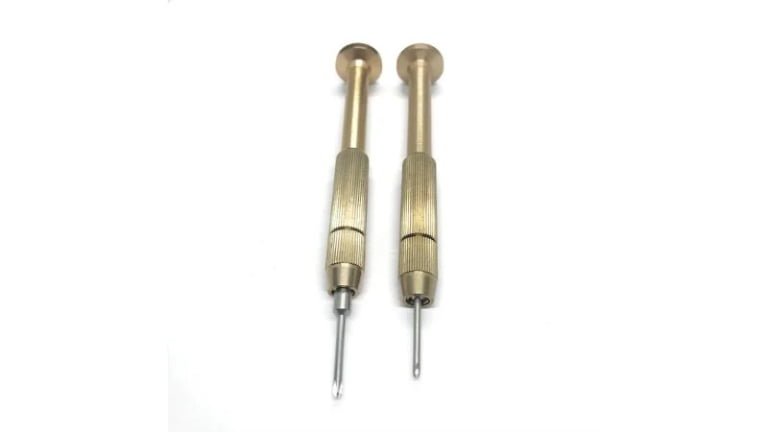
Tools can also be combined with other watch repair products to create a larger kit. For a watch strap brand, that might mean a compact strap-changing set. For a repair-tool distributor, the same spring bar tool may sit alongside screwdrivers, tweezers, bracelet tools and case-opening products. The mistake is to start with a logo and leave the working specification until later.
Private label works best when the tool configuration is designed around the target market first, and the branding is added to a product that already makes sense commercially.
FAQ
Q1: What size spring bar tool fork is best?
There is no single fork size that is best for every watch. A standard fork covers many everyday leather, rubber and fabric strap applications, while a finer fork is generally more useful where a metal bracelet or fitted end link limits working space.
Q2: Can one spring bar tool be used for both leather straps and metal bracelets?
A general-purpose spring bar tool can handle many examples of both, but metal bracelets often provide less working clearance. Repair shops dealing regularly with fitted bracelets may therefore also need a fine-fork tool or spring bar pliers.
Q3: Are replaceable spring bar tool tips better?
Replaceable tips are useful for professional users because worn tips can be changed without replacing the entire handle, and different working tips can potentially be used with one tool. For distributors, the key consideration is whether replacement tips remain dimensionally consistent and available for future orders.
Q4: What spring bar tools should a distributor stock?
A practical starting range normally includes a general-purpose fork-and-pin tool, a fine-fork professional model and, where the customer base includes professional repair shops, spring bar pliers. This covers more applications than stocking several general-purpose tools with only minor cosmetic differences.
Q5; Can spring bar tools be private labeled?
Yes. Depending on the product and order requirements, spring bar tools can be developed with customized handle finishes, tip configurations, logo marking, packaging and kit combinations. The specification should first be matched to the intended customer and application before branding details are finalized.
Conclusion
Choosing a watch spring bar tool is not simply a matter of selecting a pen-shaped tool with a fork on one end. Fork width, tip profile, working clearance, strap construction, material strength and replacement-tip consistency all influence how the tool performs in real use.
For distributors, the most practical strategy is usually not to stock many nearly identical models. A smaller, clearly differentiated range covering general strap replacement, fine-access bracelet work and professional spring bar removal is easier for customers to understand and easier for the distributor to manage.
Watch strap brands should approach the product differently, focusing on compatibility with their own straps, ease of use, packaging and branding. Professional repair-supply companies may need a wider selection of precision tips and replacement components.
Worldmile supplies ready-stock watch repair tools as well as OEM and private-label configurations for tool distributors, watch strap brands and professional repair-supply companies. Buyers can select tool configurations, packaging and product combinations according to their target users and market positioning.
Build the Right Spring Bar Tool Range for Your Market
Looking for spring bar tools for distribution, repair supply, or private-label watch strap programs? Worldmile offers ready-stock models as well as OEM options with different fork tips, pin configurations, handle finishes, replacement tips, and packaging. Tell us your target customers and application needs, and we can help you build a practical product range for your market.
Contact us for product options, specifications, and wholesale pricing.