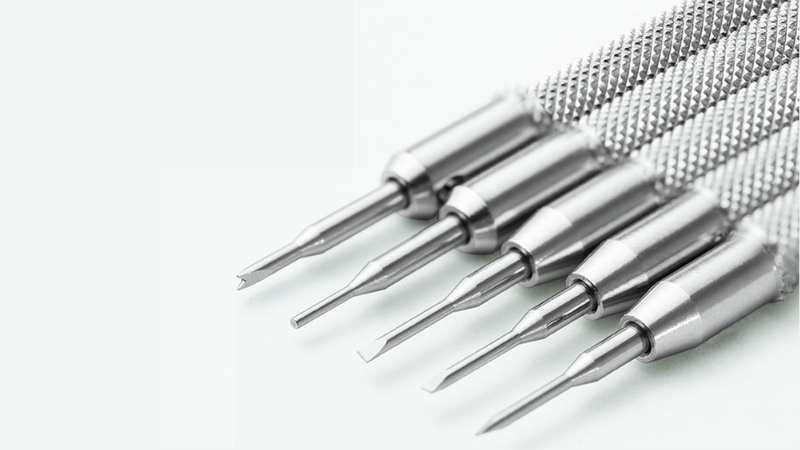
Why Spring Bar Tools Fit Naturally into a Watch Strap Product Line
A spring bar tool may technically belong to the watch repair tool category, but commercially it sits very close to the replacement watch strap business. The reason is simple: the customer’s need does not end when the strap is purchased. They still need to remove the old strap, install the new one and, in many cases, change straps again later.
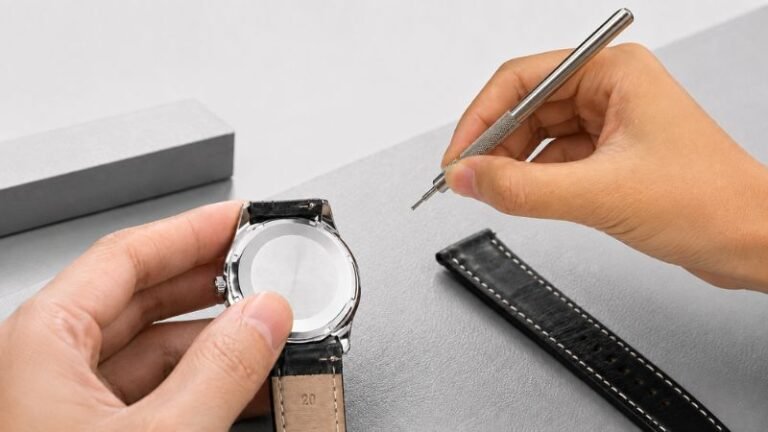
For many conventional straps, each of these steps involves access to the spring bar. That makes a watch spring bar tool a natural extension of the same customer journey rather than an unrelated product category.
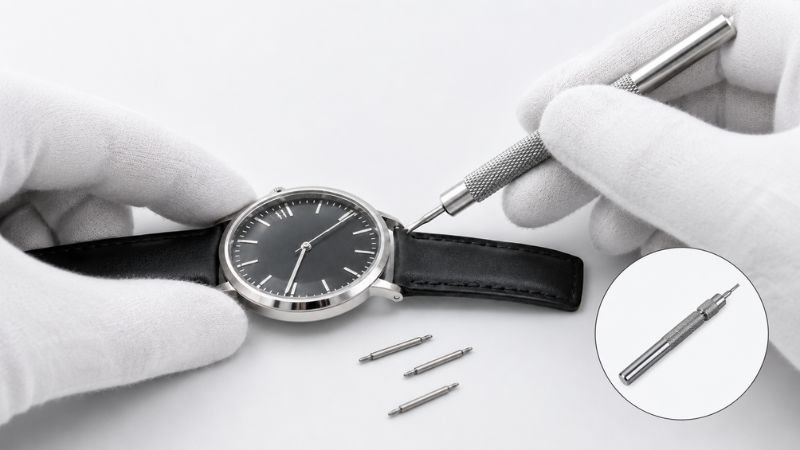
This matters when a brand is deciding how to expand its assortment. Adding a completely unrelated watch accessory requires the brand to create a new reason for customers to buy. A spring bar tool is different because the customer purchasing the strap already has a potential use for the tool.
For a leather watch strap brand, for example, the tool may simply help a first-time buyer complete installation. For a brand with leather, rubber and nylon collections, the same tool can become an add-on product available across several categories. For a more established watch accessory company, that basic product can eventually lead to fine-fork tools, spare spring bars and complete strap-changing kits.
The commercial logic therefore begins with the strap itself. The accessory range should grow from the strap-changing requirement, not from an arbitrary decision to start selling watch tools.
Bundle the Spring Bar Tool with Replacement Straps
The simplest approach is to supply the tool together with the strap. This can be done either by including a basic spring bar removal tool as part of the package or by turning the strap into a more complete replacement kit that also includes compatible spring bars and simple installation instructions.
For online watch strap brands, this can remove one of the most obvious barriers between receiving the product and actually wearing it. Customers do not have a watch shop employee beside them during installation, so providing the basic tool they need can make the purchasing experience more complete and reduce unnecessary installation questions.
For higher-value retail programs, brands may go further and present the product as a watch strap replacement kit rather than simply advertising a “free tool.” A package containing the replacement strap, suitable spring bars, an installation tool and clear instructions gives the customer a more complete solution and can also strengthen the perceived value of the product.
However, bundling only works well when the included tool is genuinely suitable for the strap. A very cheap tool that cannot properly reach the spring bar, bends during normal use or has poorly finished working edges can create a worse brand experience than providing no tool at all. Once the tool is supplied under your brand name, customers naturally treat its quality as part of the product they purchased.
The purchasing priority should therefore be to find the simplest reliable spring bar tool that works with the actual strap application, rather than simply selecting the lowest-cost model available. Standard leather, nylon and many rubber straps can usually work with a conventional fork-and-pin tool, while closely fitted curved-end straps and certain bracelets may require more attention to fork width and working clearance.
Before approving a large-volume order, the tool should always be tested with the actual straps it will be supplied with.
Sell Spring Bar Tools as Standalone Accessories
Bundling is only one way a watch strap brand can use spring bar tools. The same product category can also be developed as a standalone retail accessory, creating an additional SKU that remains closely connected to the existing strap business.
The potential customer base is already there. Someone who has previously purchased one of your straps, owns several interchangeable straps, changes straps regularly or has lost a basic installation tool may have a clear reason to buy a spring bar tool separately. More experienced watch enthusiasts may also be willing to pay for a better-finished or more precise version than the simple tool commonly included with a strap.
This changes the commercial role of the product. Instead of remaining only a packaging cost, the spring bar tool becomes a revenue-generating accessory that can be cross-sold alongside replacement straps. A simple “Add a Spring Bar Tool” option on the strap product page gives customers who already own a tool the freedom to buy the strap alone, while first-time buyers can add one when needed.
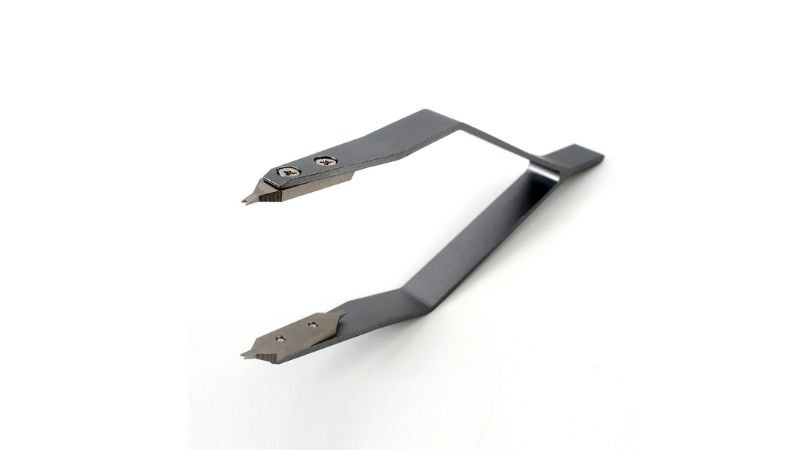
For premium strap brands, standalone retail can also be more suitable than including a low-cost giveaway tool in every package. A better-finished metal handle, more precise fork, stronger grip and branded packaging can support the positioning of the main strap collection without forcing the same accessory cost into every order.
Once the tool is sold as a separate retail product, however, customer expectations increase. Handle finishing, grip, fork geometry, working-tip quality, packaging and branding all become more important because the tool now has to justify its own selling price.
From a manufacturing perspective, we normally treat bundled and standalone tools as two different product programs. A high-volume bundled tool should focus on reliability, simplicity and cost control, while a standalone retail tool can justify better machining, finer finishing, more specialized working tips and stronger branded presentation. Trying to make one specification perform both roles often results in an unnecessarily expensive bundled tool or an underdeveloped retail product.
Build Different Tool Levels for Different Customers
A watch strap brand does not need a large number of similar spring bar tools to create a credible accessory category. In most cases, a small number of clearly differentiated product levels is easier for both buyers and customers to understand.
| Product Level | Typical Product | Customer Positioning |
|---|---|---|
| Basic | Standard Spring Bar Tool | First-time buyers / strap bundles |
| Premium | Fine-Fork Branded Tool | Watch enthusiasts / standalone retail |
| Professional | Multi-Tip Strap Changing Kit | Collectors / advanced users |
The basic spring bar tool should solve one straightforward problem: helping the customer remove and install a conventional replacement strap. It should be easy to understand, compact enough for packaging and reliable under normal use without adding unnecessary cost to the strap program.
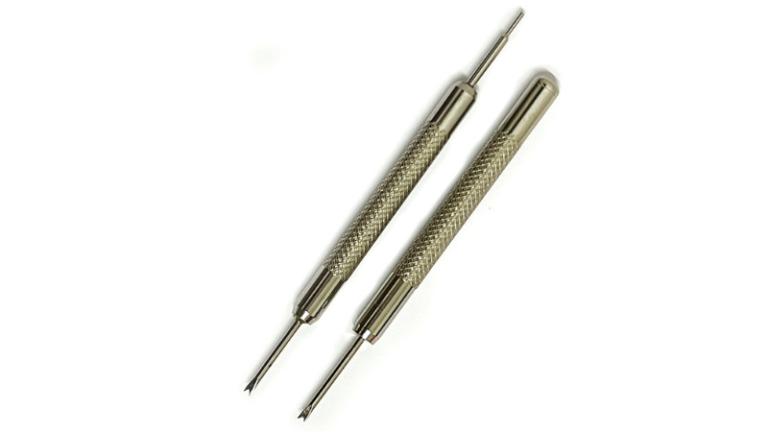
A premium spring bar tool should provide a noticeable step up in both function and presentation. A machined or knurled metal handle, improved surface finish, finer fork specification and brand marking can give the product enough differentiation to be sold independently rather than being perceived as a simple giveaway accessory.
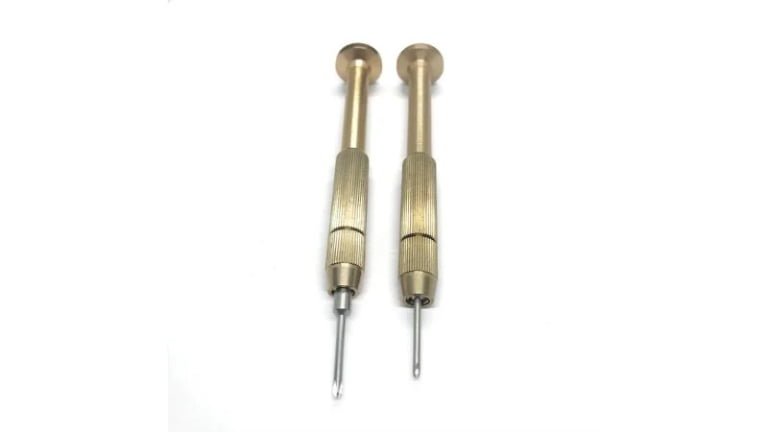
At the professional level, a multi-tip strap-changing kit can serve collectors and more experienced users who work with several strap and bracelet constructions. Interchangeable forks, pin tips, spare working ends, spring bars and organized storage can all be added when they provide a genuine functional benefit.
This tiered approach makes the product line much easier to communicate. Instead of listing several nearly identical metal tools, the brand can offer a clear progression from basic installation to higher precision and then to a more complete strap-changing system.
It also makes purchasing decisions more rational. A low-cost tool supplied with thousands of straps does not need the same construction as a tool designed for frequent use, while a premium retail product should offer more than the basic bundled model placed inside a better-looking box.
Extend the Range into a Complete Strap-Changing Product Line
Once a brand treats the spring bar tool as a product category rather than a one-time giveaway, it becomes possible to build a broader accessory range around the same customer need.
The expansion can begin with the core replacement watch strap, followed by compatible spring bars and a basic spring bar tool. From there, the brand can introduce strap-and-tool bundles, finer replacement tips and eventually a professional strap-changing kit for customers who want a more complete solution.
This approach is particularly relevant for brands that already sell multiple straps to the same customer. Someone purchasing a second or third watch strap has already shown an interest in changing the appearance or configuration of their watch, which makes that customer naturally more relevant to installation tools and related accessories.
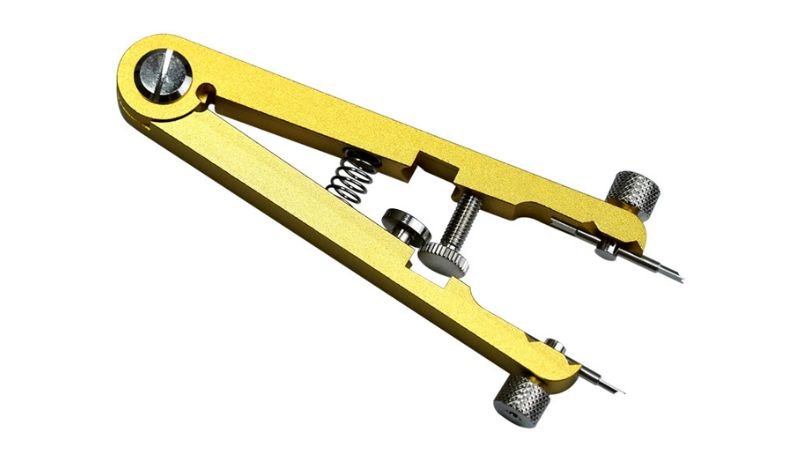
A practical product line could include the following:
| SKU | Product | Role in the Range |
|---|---|---|
| SKU 1 | Leather, Rubber and Nylon Replacement Straps | Core products |
| SKU 2 | Basic Spring Bar Tool | Standalone accessory or add-on |
| SKU 3 | Strap + Tool Bundle | Complete option for first-time buyers |
| SKU 4 | Fine-Fork Spring Bar Tool | Higher-precision retail tool |
| SKU 5 | Replacement Spring Bar Set | Compatible replacement accessory |
| SKU 6 | Professional Strap-Changing Kit | Higher-value tool solution |
For a watch strap brand, this creates more than another color or another material option. It develops a small watch strap replacement ecosystem in which several products serve the same customer and the same use case.
The brand can remain clearly focused on replacement straps while increasing the number of relevant products that the same customer may reasonably purchase. This also creates natural cross-selling opportunities without requiring the company to move into an unrelated watch accessory category.
Match the Tool to the Strap and Price Positioning
A well-structured spring bar tool range should follow the actual strap assortment. Different strap constructions create different working conditions around the spring bar, and the tool specification should reflect those differences.
For conventional leather and nylon straps, a standard fork-and-pin tool normally provides broad usability because there is often sufficient working space around the spring bar. An extremely fine fork may offer little additional benefit in these applications and can unnecessarily increase the tool specification and cost.
Rubber and silicone straps vary more. Standard straight-end designs are usually straightforward, while fitted or curved-end rubber straps can leave much less space between the strap and watch lug. In these cases, fork width and tip thickness become more important because the working end has to reach the spring bar without excessive force.
Metal bracelets require another level of consideration. Fitted end links can significantly restrict working clearance, while surrounding polished or brushed metal surfaces make accidental scratches more noticeable. A fine-fork spring bar tool or another specialized configuration may therefore be more appropriate.
Quick-release straps are different because the customer can normally remove and install the strap using the built-in lever. Including a spring bar tool with every quick-release strap may provide little additional value, although the brand can still sell the tool separately for customers who also own traditional spring-bar straps.
The retail position should also influence the specification. High-volume entry-level strap programs generally need a simple construction, reliable working tip, compact packaging and competitive cost. Premium leather strap collections can justify better handle finishing and brand marking, while enthusiast products may use finer forks or replaceable working ends. Professional tool kits can go further by adding multiple tip configurations, spare components and organized storage.
For this reason, sourcing one spring bar tool specification and using it across every strap line simply for convenience is rarely the best solution. The right tool should match both the strap application and the commercial position of the product.
Private Label and Packaging Options for Watch Strap Brands
When a watch strap brand approaches us for a private-label spring bar tool program, the first discussion should focus on how the tool will actually be used and sold. The strap type, target customer, retail position, expected usage frequency and whether the tool will be bundled or sold independently all influence the specification.
For high-volume bundled tools, customization normally focuses on a practical fork-and-pin configuration, suitable handle dimensions, consistent working tips, compact packaging and simple logo marking where required. The objective is to control cost while still providing a tool that performs reliably enough to support the strap product.
For standalone retail tools, there is more room to develop a recognizable branded product. Laser logo marking, different handle finishes, improved knurling, fine-fork configurations, branded boxes and instruction inserts can all help separate the retail model from a basic bundled accessory.
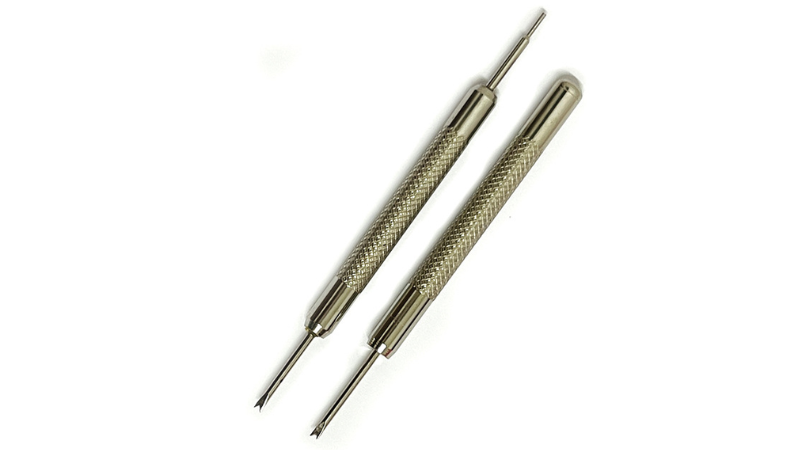
At the professional level, brands can develop multi-tip strap-changing kits containing several fork sizes, pin tips, spare components and organized storage. In this case, the product is no longer simply supporting the strap; it has become a complete retail tool in its own right.
Packaging should follow the same commercial logic. A bundled tool may only need a protective sleeve or simple paper holder, while a standalone premium tool should have enough presentation to work as an independent retail product. A professional kit should focus on clear organization, easy access to working tips and convenient replacement of spare parts.
The principle is straightforward: do not over-package a basic bundled tool, and do not make a standalone retail tool look like a free accessory. Each product should be engineered and presented according to the role it plays in the brand’s assortment.
FAQ
Q1: Should a watch strap brand bundle spring bar tools with straps or sell them separately?
Both approaches can work. A basic spring bar tool can be bundled with a replacement strap to make installation easier, while better-finished or more specialized models can be sold separately as accessories. Mature brands can use both approaches within the same product line.
Q2: Can one spring bar tool work with every type of watch strap?
Not always. Standard leather and nylon straps often work well with a general-purpose fork, while fitted rubber straps and metal bracelets may require finer working tips. The tool should be tested with the actual strap construction before bulk production.
Q3: Can watch strap brands create private-label spring bar tools?
Yes. Depending on the tool design and order quantity, customization can include logo marking, handle finish, fork configuration, pin tips and retail packaging. For higher-level programs, multiple replacement tips and storage cases can also be developed.
Q4: Should quick-release watch straps include a spring bar tool?
Usually not for basic installation because the built-in quick-release mechanism allows the strap to be removed without a separate tool. However, the brand can still sell spring bar tools independently for customers who also own traditional spring-bar straps.
Q5: Can a spring bar tool be developed into a complete strap-changing kit?
Yes. A more complete kit can combine a precision handle, different fork sizes, pin tips, replacement tips, spare spring bars and organized packaging. This is particularly suitable for watch enthusiasts and brands developing a higher-value accessory range.
Conclusion
For watch strap brands, a spring bar tool can serve several different commercial purposes. It can be bundled with a replacement strap to make installation easier, sold separately as an additional accessory, or developed further into fine-fork tools, replacement components and professional strap-changing kits.
This allows the product line to grow naturally from replacement straps into spring bars, installation tools, strap-and-tool bundles and higher-value changing kits, all while remaining focused on the same customer need: changing and maintaining watch straps.
The key is not to add tools simply because they are inexpensive accessories. A basic bundled tool should be simple and reliable, a standalone tool should offer enough quality and presentation to justify its own retail value, and a professional kit should provide genuinely useful additional functions rather than simply adding more components.
From a manufacturing perspective, this is where a supplier’s understanding of spring bar tool construction, working-tip requirements and different market positions becomes important. Fork specifications, handle design, packaging and cost targets should all be developed around how the watch strap brand intends to sell and position the final product.
Build a Complete Spring Bar Tool Range Around Your Watch Straps
Worldmile manufactures precision watch tools for watch strap brands, watch tool distributors and professional repair-supply companies. We support spring bar tools for high-volume strap bundles, standalone private-label retail products and upgraded multi-tip strap-changing kits.
Different fork sizes, pin configurations, handle finishes, logo marking, replacement tips and packaging options can be selected according to the strap type, target customer and price level.
If you are expanding a replacement watch strap range, send us your strap types, target market, expected order quantity and intended product positioning. We can help evaluate whether your program is better suited to a basic bundled tool, a standalone branded model or a tiered spring bar tool range.
Contact Worldmile for spring bar tool specifications, private-label options and wholesale pricing.